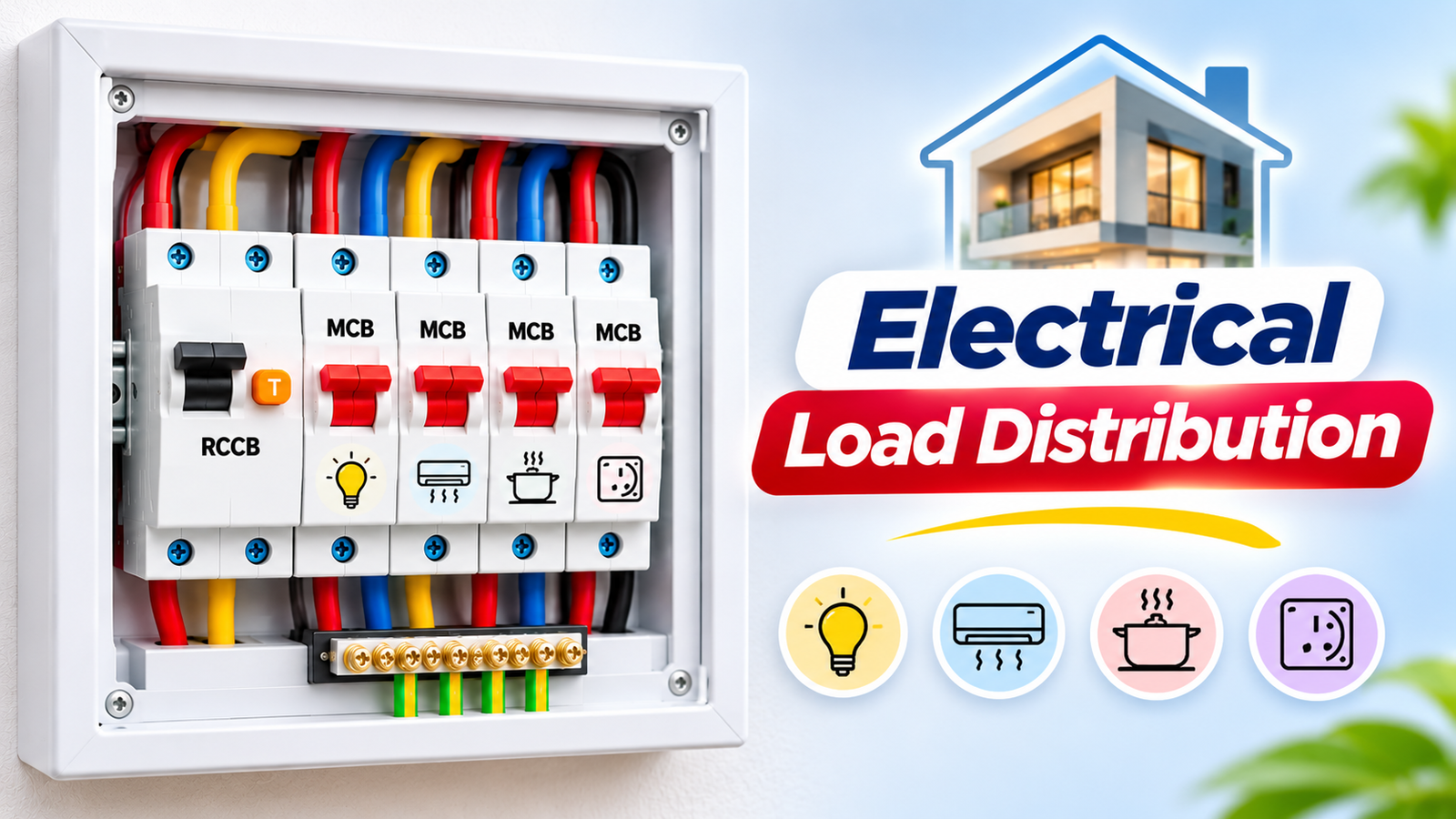
Modern buildings depend on electricity for lighting, air conditioning, kitchen appliances, computers, machinery and many other essential systems. As the number of electrical appliances increases, managing the electrical load becomes an important part of installation planning.
One common mistake in electrical installations is connecting too many appliances to an unsuitable circuit or ignoring the actual load requirements of different areas. This can contribute to frequent circuit breaker tripping, overheating and unnecessary electrical interruptions.
Proper electrical load distribution helps organise the installation and ensures that circuits and protective devices are selected according to their intended requirements.
1. What Is Electrical Load Distribution?
Electrical load distribution means dividing the total electrical demand of a building among different circuits and distribution boards according to a planned electrical design.
Instead of connecting every appliance to a single circuit, electrical loads are organised into suitable groups based on their purpose and electrical requirements.
For example, a residential building may have separate circuits for:
- Lighting and ceiling fans.
- General-purpose power sockets.
- Kitchen appliances.
- Air conditioning systems.
- Water pumps and other dedicated equipment.
This arrangement makes the electrical system easier to understand, inspect and maintain.
2. Why Is Proper Load Distribution Important?
Helps Prevent Circuit Overloading
Distributing electrical loads appropriately helps avoid placing excessive demand on individual circuits and their associated wiring and protective devices.
Supports Better Electrical Reliability
A well-planned distribution arrangement can help reduce unnecessary interruptions caused by poorly organised circuits.
Makes Maintenance Easier
Clearly separated circuits help electricians identify the affected area and carry out inspections more efficiently.
Allows Future Expansion
Planning for future electrical requirements can make it easier to accommodate additional appliances or equipment when the installation is upgraded.
3. Important Factors to Consider While Planning Electrical Loads
A. Calculate the Connected Load
Start by identifying the electrical appliances and equipment that will be connected to the installation. Consider their rated power, voltage, current and operating requirements.
Connected load alone does not determine the final circuit design. Demand, diversity, starting current and expected operating conditions may also need to be considered.
B. Separate High-Power Appliances
Equipment such as air conditioners, water heaters, pumps and other high-power appliances may require dedicated circuits depending on their ratings and applicable installation requirements.
Dedicated circuits can help ensure that the equipment receives an appropriately designed supply.
C. Select Suitable Wiring
Electrical cables must be selected according to current-carrying capacity, installation method, ambient temperature, voltage drop and other relevant design conditions.
Using an unsuitable cable size can create overheating and electrical safety risks.
D. Choose the Correct Protective Devices
Protective devices must be selected to match the circuit design and intended function.
An MCB protects against overload and short-circuit currents within its specified ratings. An RCCB detects residual current and provides protection against certain earth-leakage risks.
Their ratings and characteristics should be coordinated with the wiring and the overall electrical installation.
E. Consider Three-Phase Load Balancing
In three-phase installations, loads should be distributed appropriately across the phases to help avoid excessive phase imbalance.
Unbalanced loading can affect system performance and may increase neutral current in certain conditions. A qualified electrical professional should assess the load distribution and design accordingly.
4. Common Electrical Load Distribution Mistakes
- Connecting too many appliances to one circuit.
- Ignoring the starting current of motors and compressors.
- Selecting MCB ratings without considering cable capacity.
- Failing to plan dedicated circuits where required.
- Ignoring phase balancing in three-phase installations.
- Not updating the distribution board after adding new equipment.
- Using unsuitable or poor-quality electrical components.
Avoiding these mistakes requires proper electrical planning, accurate load assessment and professional installation.
5. Role of Electrical Protection Devices in Load Management
Electrical protection devices are important parts of a properly designed distribution system.
MCB (Miniature Circuit Breaker): Protects circuits against overload and short-circuit currents.
RCCB (Residual Current Circuit Breaker): Detects residual current and helps protect against certain earth-leakage risks. It does not independently provide overload or short-circuit protection.
Isolator: Provides manual isolation of a circuit or equipment for suitable maintenance activities.
Changeover Switch: Allows switching between alternative power sources when selected and installed according to the electrical design.
Each device serves a different purpose. Correct selection and coordination are essential for a properly designed electrical installation.
6. Why Should Electrical Load Planning Be Done by Professionals?
Electrical load planning involves more than adding appliance wattages together. It requires consideration of cable sizing, protective device selection, short-circuit conditions, voltage drop, earthing, demand and applicable electrical standards.
A qualified electrical engineer or professional electrician can assess the installation and prepare a suitable distribution plan.
Professional planning is especially important for commercial buildings, industrial facilities and installations where electrical demand may increase over time.
Important Electrical Safety Note
Never increase an MCB rating simply to stop frequent tripping. The circuit wiring, load, protective device and installation conditions must be assessed together by a qualified professional. Electrical modifications should follow applicable standards and regulations.
Conclusion
Proper electrical load distribution is an essential part of designing a reliable electrical installation. It helps organise circuits, manage electrical demand and support the correct operation of protective devices.
Whether it is a residential home, commercial office or industrial facility, careful load planning and suitable electrical components can make a significant difference to the overall installation.
At Maasarent, we believe that electrical safety starts with proper planning, quality products and responsible installation practices.
Think Safety, Choose Quality!
Explore Maasarent's range of MCBs, RCCBs, Isolators and Changeover Switches.
Call Now: 9355255105
Visit www.maasarent.com