Electricity powers almost everything around us, from household appliances and lighting systems to office equipment and industrial machinery. While electricity makes everyday life easier, an electrical installation must be designed with appropriate safety measures.
One important element of electrical safety is proper earthing, also known as grounding. It is often overlooked because most of its components remain hidden within the electrical installation. However, earthing plays an important role in helping protect people and equipment when an electrical fault occurs.
Whether you own a home, manage a commercial property or work in the electrical industry, understanding earthing is essential for making informed electrical safety decisions.
1. What Is Electrical Earthing?
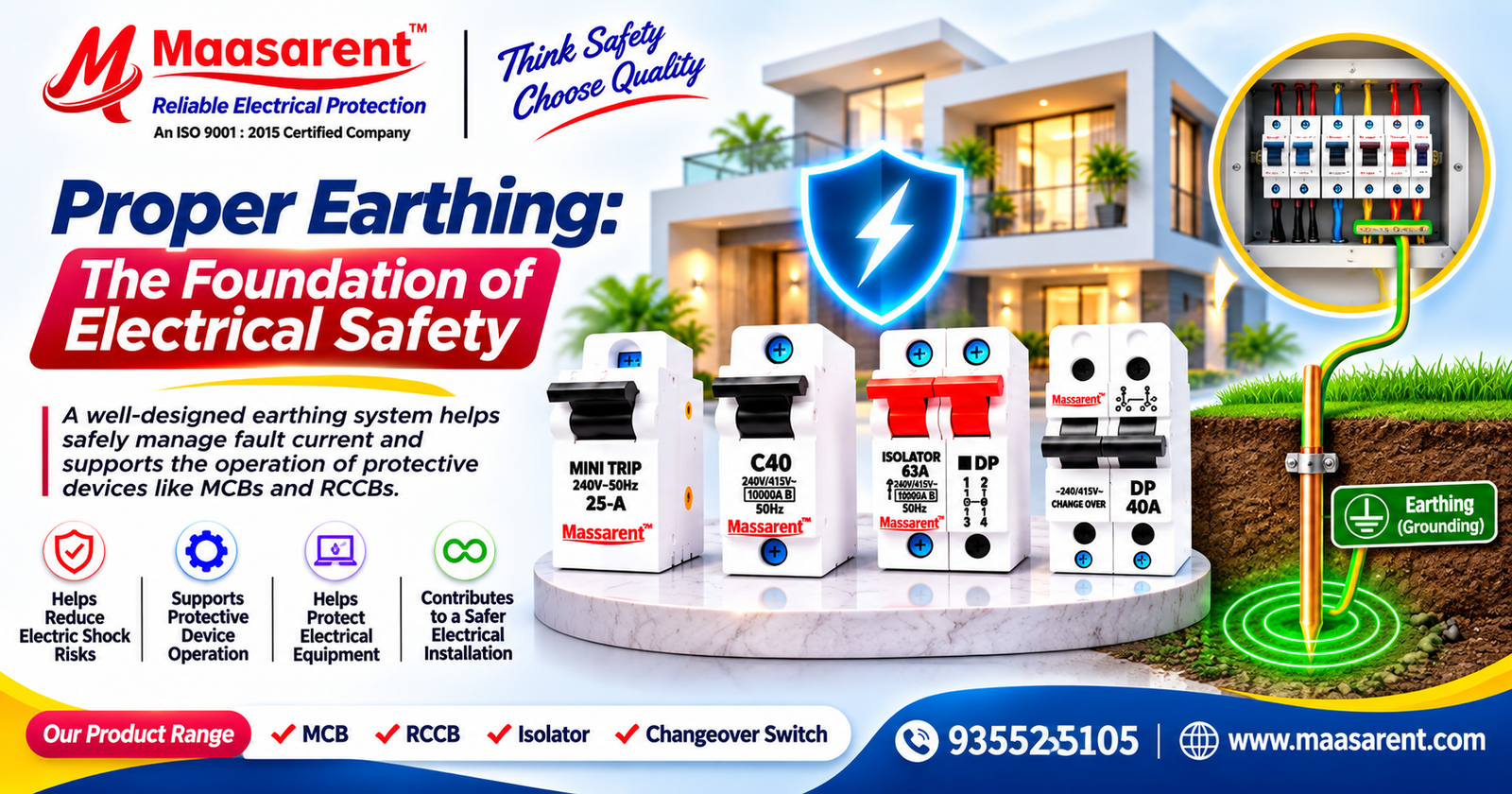
Electrical earthing is a safety arrangement that connects designated exposed conductive parts of electrical equipment to the installation's earthing system.
Under fault conditions, this arrangement provides a suitable path for fault current so that the relevant protective devices can operate and disconnect the supply.
For example, if insulation inside a metal-bodied appliance fails and a live conductor touches its metal enclosure, the earthing arrangement can help facilitate the operation of protective devices.
Without a properly designed earthing system, exposed metal parts may become dangerous during certain electrical faults.
2. Why Is Proper Earthing Important?
Helps Reduce Electric Shock Risks
A correctly designed protective earthing arrangement helps provide a fault-current path that supports the operation of suitable protective devices, reducing the risk of dangerous touch voltages.
Supports Protective Device Operation
Proper earthing and bonding help create the conditions required for protective devices to disconnect certain electrical faults.
Helps Protect Electrical Equipment
A properly designed earthing system contributes to the overall safety of electrical equipment and installations during fault conditions.
Supports a Safer Electrical Installation
Earthing is an important part of a coordinated electrical safety design in residential, commercial and industrial buildings.
3. How Does an Earthing System Work?
A protective earthing system works together with the electrical installation and its protective devices.
During normal operation, exposed conductive parts connected to protective earth should not carry normal load current.
If an insulation fault causes a live conductor to contact an exposed metal part, the protective earthing path helps carry fault current. Depending on the installation design, this can cause an MCB or another suitable protective device to disconnect the faulty circuit.
The exact fault-current path and disconnection method depend on the earthing arrangement, protective device characteristics and installation design.
This is why earthing should never be treated as an optional connection or an improvised wiring arrangement.
4. Common Signs of Possible Earthing Problems
Some electrical problems may indicate an issue with the earthing arrangement. These signs require professional investigation:
- Electric shocks or tingling sensations from metal-bodied appliances.
- Repeated RCCB or protective device tripping.
- Damaged or disconnected protective earth conductors.
- Incorrect wiring inside electrical distribution boards.
- Corrosion or deterioration of accessible earthing connections.
- Unusual electrical behaviour after installation or maintenance work.
These symptoms can have multiple causes. Never assume that an earthing problem is the only explanation. A qualified electrician should inspect and test the installation.
5. Difference Between Earthing, MCB and RCCB
Earthing, MCBs and RCCBs are different elements of electrical protection. They work together but perform different functions.
| Component |
Main Function |
| Earthing |
Provides a protective path for fault current. |
| MCB |
Protects circuits against overload and short-circuit currents. |
| RCCB |
Detects residual current and provides protection against certain earth-leakage risks. |
An RCCB does not replace protective earthing, and it does not independently provide overload or short-circuit protection. Similarly, an MCB is not a substitute for an RCCB where residual-current protection is required.
The complete installation should use appropriately selected and coordinated protective measures.
6. Important Earthing Mistakes to Avoid
- Ignoring damaged or disconnected earth conductors.
- Using unsuitable materials or undersized protective conductors.
- Making improper connections inside distribution boards.
- Assuming that an RCCB makes earthing unnecessary.
- Failing to test the earthing arrangement after installation or modification.
- Using improvised connections instead of an approved earthing system.
- Ignoring applicable electrical standards and manufacturer instructions.
7. Why Should Earthing Be Inspected Regularly?
Earthing systems can deteriorate due to corrosion, loose connections, mechanical damage and environmental conditions.
Periodic inspection and appropriate electrical testing help verify whether the installation continues to meet its safety requirements.
Depending on the installation, a qualified professional may assess:
- Continuity of protective conductors.
- Condition of earthing connections.
- Earth electrode and earthing system performance.
- Insulation and wiring condition.
- Operation of relevant protective devices.
Testing should use suitable instruments and methods for the particular earthing arrangement. A single earth resistance reading does not establish that an entire installation is safe.
Conclusion
Proper electrical earthing is an essential part of a well-designed electrical installation. It helps provide a protective path during certain fault conditions and supports the operation of suitable electrical protection devices.
From residential buildings to commercial and industrial facilities, a properly designed, installed and tested earthing system contributes to better electrical safety.
Remember: quality electrical products, correct installation, suitable protective devices and regular inspection should always work together.
At Maasarent, we believe that electrical safety begins with awareness, responsible practices and the right protection solutions.
Think Safety, Choose Quality!
Explore Maasarent's range of MCBs, RCCBs, Isolators and Changeover Switches.
Call Now: 9355255105
Visit www.maasarent.com