
Why Every Home Needs an RCCB for Shock Protection
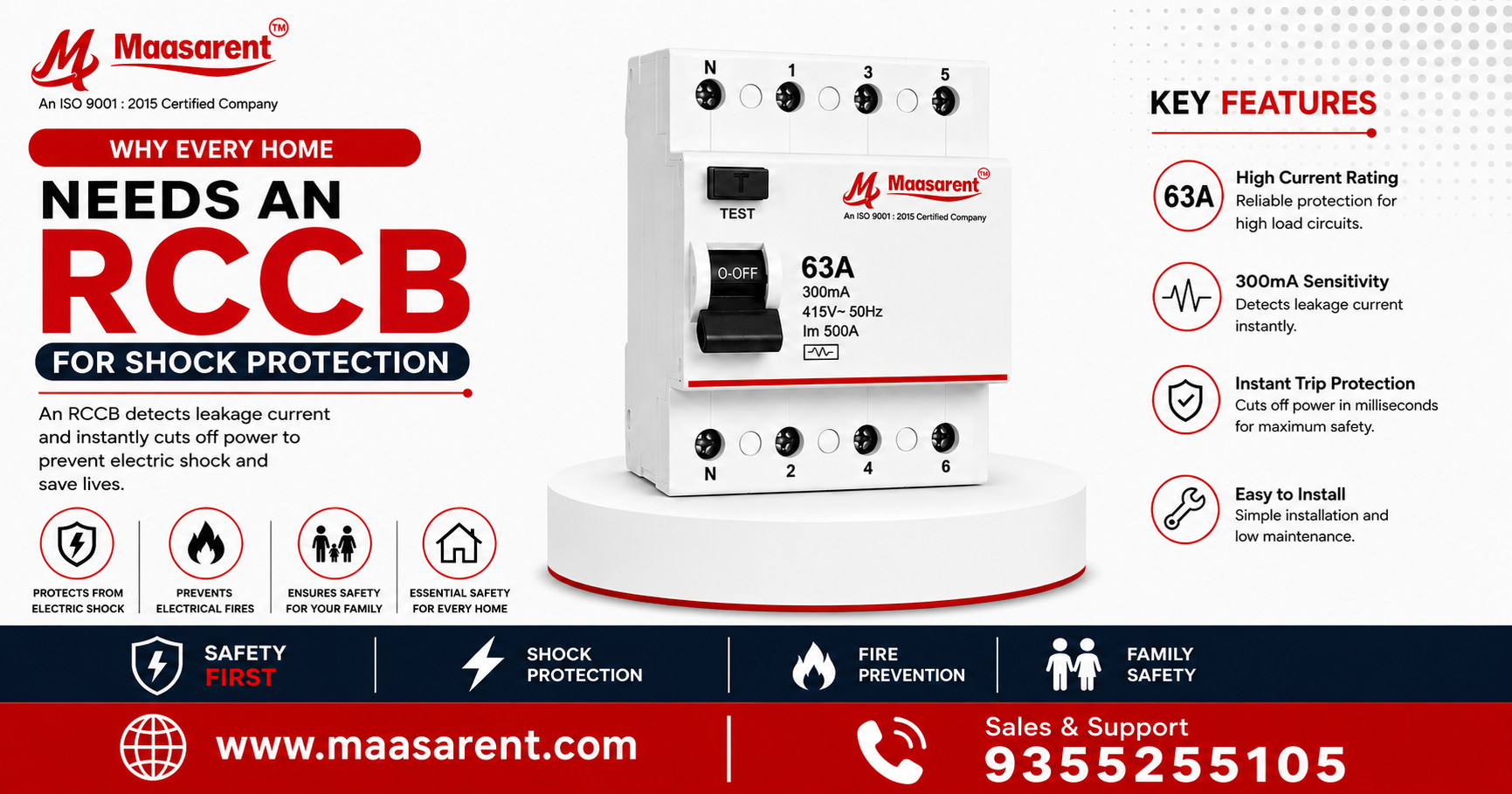
Why Every Home Needs an RCCB for Shock Protection
An RCCB can provide an important layer of protection against electric shock and leakage currents in your home.
Quick Answer: An RCCB (Residual Current Circuit Breaker) detects abnormal leakage of electrical current and can disconnect the power supply quickly when a dangerous residual current is detected. It is designed to help reduce the risk of electric shock and electrical fires caused by leakage.
What Is an RCCB?
An RCCB (Residual Current Circuit Breaker) is a protective electrical device installed in a home's distribution board. Its main purpose is to detect an imbalance between the current flowing through the live conductor and the current returning through the neutral conductor.
Under normal conditions, these currents should be approximately equal. If some current starts flowing through an unintended path—for example, through a damaged appliance, faulty wiring, moisture, or a person—the RCCB can detect the difference and disconnect the circuit.
Why Is This Important?
Electricity can sometimes find an unintended path to earth. This leakage may not necessarily create enough current to operate a conventional overcurrent protective device. An RCCB provides an additional protection layer specifically designed to detect residual current.
How Does an RCCB Protect Your Family?
One of the biggest benefits of an RCCB is its ability to respond to earth leakage. Consider a situation where the insulation inside an appliance becomes damaged. If leakage current reaches an accessible metal part, touching it could create a shock hazard.
An appropriately selected and correctly installed RCCB can detect the resulting residual current and disconnect the supply. This can significantly reduce the duration of exposure to an electrical fault.
However, an RCCB should not be considered a guarantee against every type of electric shock. Proper earthing, suitable circuit protection, safe wiring, and correct installation remain essential.
RCCB vs MCB: What Is the Difference?
For many residential electrical installations, these devices perform different and complementary roles. An RCCB is not simply a replacement for an MCB. Your electrical protection system should be designed according to the installation and applicable electrical standards.
Where Is an RCCB Especially Useful?
- Homes with bathrooms and other moisture-prone areas
- Kitchens with multiple electrical appliances
- Homes using washing machines, water heaters, pumps and other high-power appliances
- Older electrical installations that may require safety upgrades
- Residential circuits where additional protection against earth leakage is required
Don't Ignore Electrical Safety
A small electrical fault can become a serious safety issue when leakage, damaged insulation or improper wiring is involved. Installing suitable protection devices and having the electrical system inspected by a qualified professional can help make your home safer.
Choose the Right RCCB for Your Home
RCCBs are available with different sensitivity ratings and configurations. The correct choice depends on factors such as the electrical installation, circuit arrangement, local requirements and the level of protection required.
Do not select an RCCB based only on price. A qualified electrician should assess your home's wiring and recommend an appropriate device. Installation, testing and maintenance should also be carried out correctly.
Final Thoughts
Electrical safety should never be treated as an optional upgrade. An RCCB can add an important layer of protection by detecting residual current and disconnecting the supply when leakage is detected.
For a safer home, combine suitable RCCB protection with proper earthing, correctly rated MCBs, good-quality electrical products and regular inspection of your wiring and appliances.
Build a Safer Electrical System with Maasarent
Explore reliable electrical protection solutions from Maasarent and make electrical safety a priority in every home.