Warning Signs Ko Nazarandaaz Na Karein
Maasarent | Electrical Safety Awareness
Warning Signs Ko Nazarandaaz Na Karein: Burning Smell Ya Unusual Heating? Take It Seriously.
Electrical warning signs can appear before a serious incident. Learn what to look for, when to seek professional help and how to respond safely.
Electricity makes everyday life easier, powering our lights, appliances, computers, air conditioners and essential business equipment. But when an electrical system develops a fault, it may show warning signs that should never be ignored.
A burning smell near a socket, an unusually hot switch, buzzing from an electrical panel or a circuit breaker that keeps tripping may indicate a problem that needs professional attention. Although these signs do not always mean a serious fault is present, ignoring them can increase the risk of electric shock, equipment damage or fire.
At Maasarent, electrical safety awareness is an important part of understanding electrical protection. This guide explains common warning signs, what they may indicate and the safest steps to take when something does not seem right.
Important safety reminder
If you notice smoke, flames, active sparking or a strong burning smell, move away from the affected area. Do not touch the equipment, open the electrical panel or attempt a repair. If there is smoke or fire, evacuate and contact local emergency services. Do not use water on an electrical fire.
1. Burning Smell Near Sockets or Electrical Panels
A persistent burning or melted-plastic smell near a socket, switchboard, appliance or electrical distribution panel is a warning sign that deserves immediate attention. Possible causes include overheating, damaged insulation, loose connections or a faulty electrical component.
The smell may appear before visible damage becomes obvious. Never assume the problem will disappear on its own simply because the smell becomes less noticeable.
What should you do?
- Keep people away from the affected area.
- Do not touch the socket, switch, plug or panel to check its temperature.
- If there is smoke, fire or active sparking, evacuate and call emergency services.
- Arrange an urgent inspection by a qualified electrician. Do not resume use until the fault has been assessed and the installation is declared safe.
2. Unusual Heating Around Switches, Plugs or Panels
Electrical equipment can become warm during normal operation, depending on its design and load. However, a socket, plug, switch or panel that becomes unusually hot, develops discolouration or shows signs of melting may indicate a fault.
Possible causes include overloaded circuits, poor connections, damaged components or equipment operating outside its intended conditions. The exact cause needs to be determined through professional inspection.
Do not touch the equipment to test how hot it is, remove the cover or try to tighten connections yourself. If the equipment appears dangerously hot, is discoloured or smells burnt, keep away and seek urgent professional help.
3. Frequent Circuit Breaker Tripping
A circuit breaker is designed to interrupt a circuit under specified fault conditions. If an MCB trips repeatedly, it may be responding to an overloaded circuit, a short circuit or another electrical problem.
Repeated tripping should not be treated as a minor inconvenience. The breaker may be doing its job by interrupting an unsafe condition.
Do not repeatedly reset a tripping breaker, bypass it or replace it with a higher-rated device without an appropriate electrical assessment. A qualified electrician can identify the underlying cause and determine whether the circuit, wiring or equipment needs attention.
4. Buzzing, Crackling or Unusual Electrical Sounds
Unusual buzzing, crackling or popping sounds from a socket, switchboard, appliance or electrical panel may indicate a loose connection, a faulty component or electrical arcing.
Some equipment can produce normal operating sounds, so the context matters. A new, persistent or increasingly loud sound should be investigated rather than ignored, especially if it occurs alongside unusual heating, a burning smell or flickering lights.
Do not open the equipment to locate the sound. Keep a safe distance and arrange an inspection by a qualified electrician. If the sound is accompanied by smoke or active sparking, move away and contact emergency services as appropriate.
5. Flickering Lights or Unexpected Power Fluctuations
Lights may flicker for several reasons, including a faulty lamp, an incompatible dimmer, a poor connection or a problem with the electrical supply. If multiple lights flicker, brightness changes unexpectedly or the problem repeatedly returns, the installation may need professional assessment.
Pay particular attention when flickering occurs alongside buzzing, unusual heating, burning smells or repeated breaker trips. These combined signs should not be ignored.
A qualified electrician can inspect the installation and determine whether the issue is local to a fixture, related to the circuit or associated with the incoming supply. Contact the electricity provider when a supply-side problem is suspected.
6. Sparks, Smoke or Visible Damage
Unexpected sparking, smoke, melted insulation, black marks or cracked electrical accessories are serious warning signs. They may indicate damaged equipment, poor connections or an electrical fault.
Do not touch the affected equipment, unplug it if doing so would bring you near the hazard, or attempt to investigate the panel yourself. Keep others away and call emergency services if smoke, fire or active sparking is present.
Do not use the affected circuit or equipment again until a qualified professional has inspected it and confirmed it is safe.
7. Electric Shocks or Tingling Sensations
A shock or tingling sensation when touching an appliance, switch, metal fitting or other equipment is never something to dismiss. It may indicate an electrical fault, damaged insulation or an earthing problem.
Stop using the affected equipment and keep others away. Do not touch the person or equipment if doing so could expose you to an electrical hazard. If someone is being shocked, do not touch them directly until the power source has been safely isolated by an appropriate method.
Call emergency services when necessary. Anyone who has experienced an electric shock should seek appropriate medical advice, particularly if the shock was significant or there are symptoms such as chest pain, burns, confusion or difficulty breathing.
What Do Electrical Protection Devices Do?
Different electrical protection devices are designed to address different risks. Understanding their functions helps explain why the right selection and professional installation matter.
These devices serve different purposes and cannot be substituted for one another without considering the installation design. Protective devices also do not eliminate every electrical risk. Correct wiring, earthing, ratings, installation and maintenance remain essential.
Why Professional Inspection Matters
Electrical faults are not always visible from the outside. A qualified electrician can assess the installation, identify possible causes and determine what corrective action is required.
Professional inspection may include checking the affected circuit, connections, protective devices, wiring condition and other relevant components using appropriate procedures and equipment.
For homes, offices, shops and industrial environments, regular electrical maintenance can also help identify deterioration before it develops into a more serious problem.
Never open an electrical panel, handle exposed wiring, bypass a protective device or attempt live electrical testing unless you are appropriately qualified and equipped to carry out the work safely.
Simple Electrical Safety Habits for Every Home and Business
- Avoid overloading sockets and extension boards.
- Stop using damaged plugs, cables and electrical accessories.
- Keep electrical equipment away from water unless it is specifically designed for the environment.
- Do not ignore burning smells, unusual heating, buzzing or repeated breaker trips.
- Arrange professional inspection when electrical problems appear.
- Ensure protective devices and wiring are appropriate for the installation and maintained correctly.
Frequently Asked Questions
Is a burning smell near a switch dangerous?
It can indicate overheating or a faulty connection. Keep away from the affected area and arrange urgent professional inspection. If there is smoke or fire, evacuate and call emergency services.
Why does my circuit breaker keep tripping?
Possible causes include an overloaded circuit, a short circuit or faulty equipment. Do not repeatedly reset or bypass the breaker. Have a qualified electrician identify the cause.
Should I touch a hot socket to check it?
No. Do not touch equipment that appears unusually hot, damaged or discoloured. Keep away and seek professional help.
Can an MCB prevent every electrical hazard?
No. An MCB addresses specified overcurrent conditions. Other risks may require different protective measures, suitable earthing and correctly designed electrical installations.
When should I call a qualified electrician?
Seek professional help for repeated breaker trips, unusual heating, burning smells, buzzing, flickering associated with other warning signs, damaged accessories or any suspected electrical fault. Smoke, fire and active sparking require immediate attention from a safe distance.
Conclusion: Don't Ignore the Warning Signs
Burning smells, unusual heating, repeated breaker trips, buzzing sounds, flickering lights and electric shocks can all indicate electrical problems that deserve attention. Recognising these signs early and seeking professional help can reduce avoidable risks.
Never attempt dangerous DIY electrical repairs or assume that a protective device makes an installation completely safe. If something seems wrong, keep away from the affected equipment and get it checked by a qualified electrician.
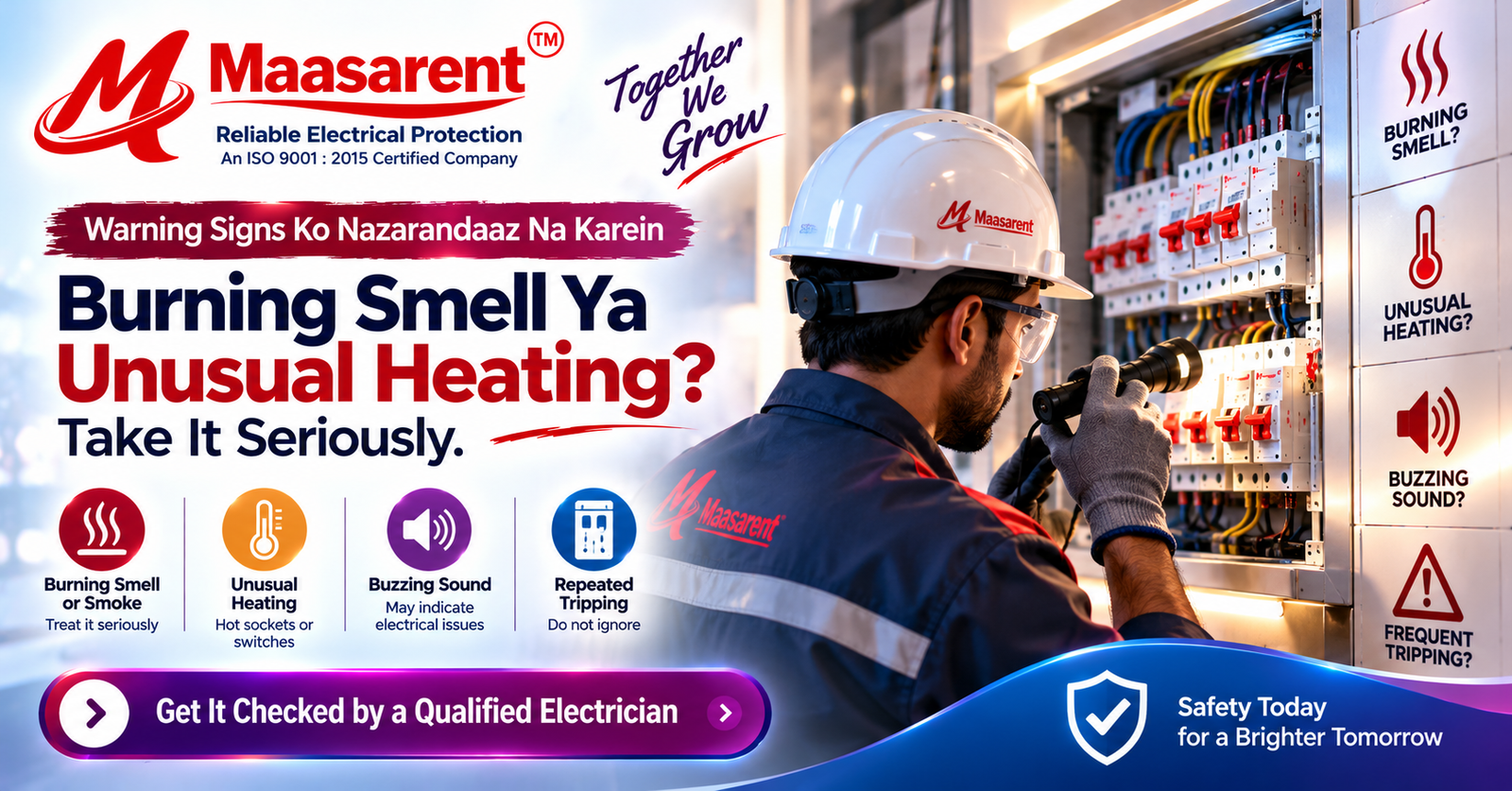
Burning Smell Ya Unusual Heating? Take It Seriously. Share this safety reminder with your family, friends, colleagues and customers. One informed decision may help someone recognise a hazard and respond more safely.
Maasarent | Electrical Safety Awareness
Get It Checked by a Qualified Electrician
Never ignore electrical warning signs. Prioritise safety and seek professional help when needed.
Visit Maasarent WebsiteWebsite: maasarent.com
Disclaimer: This article provides general electrical safety awareness and is not a substitute for professional inspection, emergency services or medical advice. Always follow applicable electrical safety requirements.