Maasarent vs Havells MCB: Which One Should You Choose?
Maasarent vs Havells MCB: Which One Should You Choose?
Choosing the right MCB (Miniature Circuit Breaker) is an important part of electrical protection. Maasarent and Havells are two brands buyers may consider when selecting MCBs, but the better choice depends on the application, electrical requirements, product specifications, and the exact model being compared. Here’s a practical, specification-focused comparison to help you make a more informed decision.
What Is an MCB?
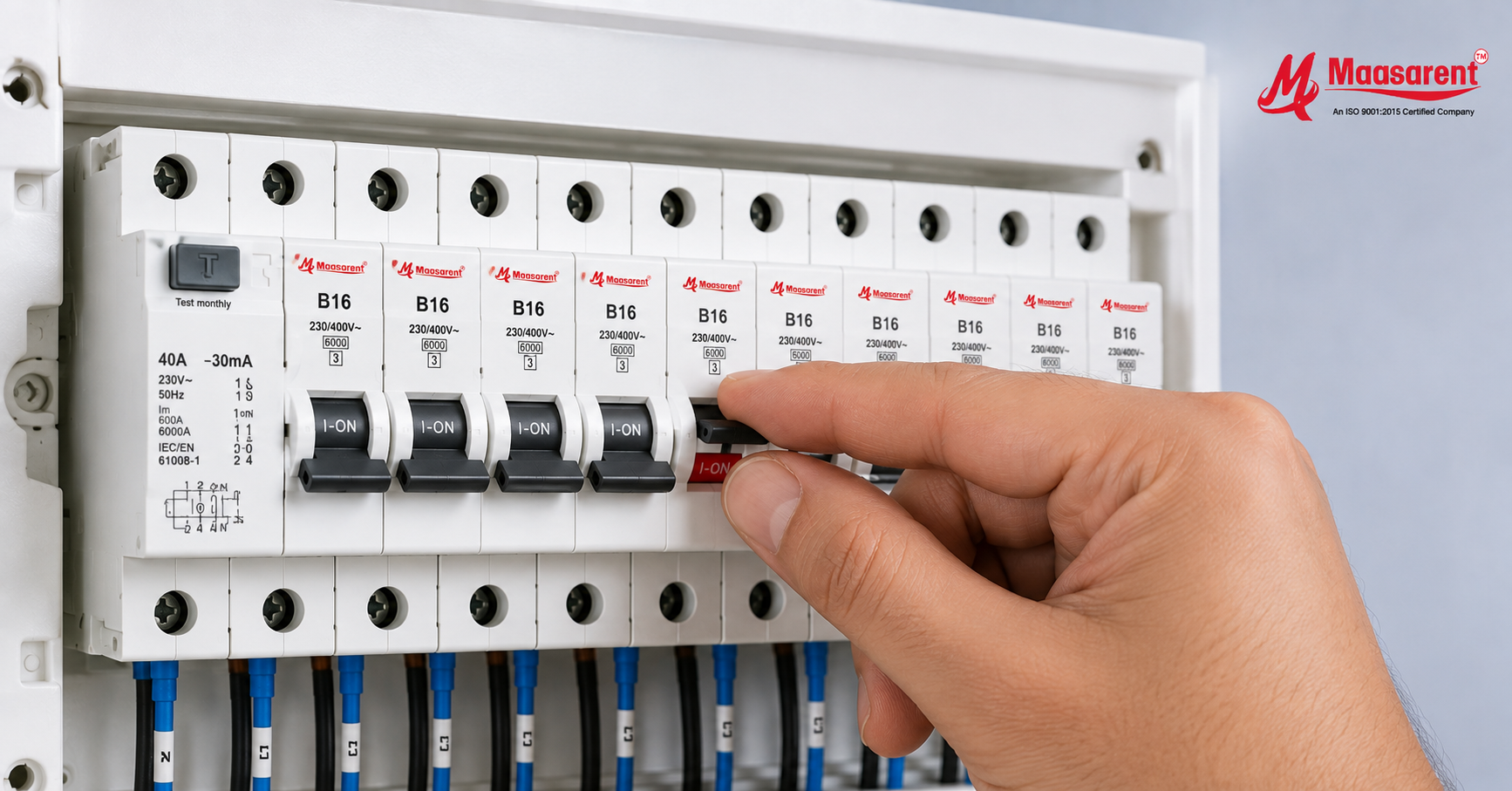
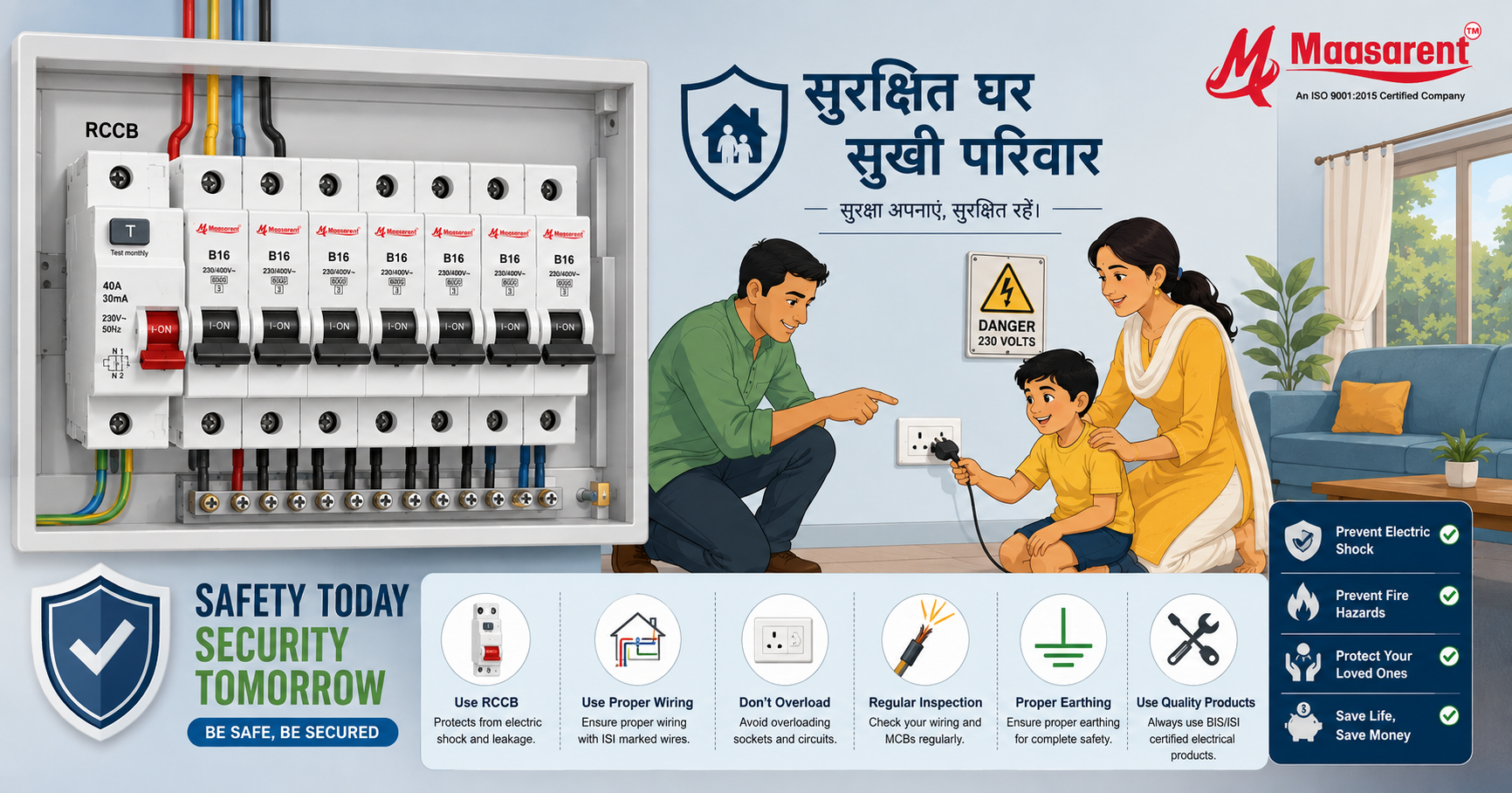
An MCB, or Miniature Circuit Breaker, is an electrical protection device designed to interrupt a circuit when an abnormal condition such as an overload or short circuit occurs. Unlike a conventional fuse, an MCB can generally be reset after the fault has been identified and the circuit is safe to energize again.
Common applications: homes, shops, offices, distribution boards, commercial buildings, and many electrical installations.
Maasarent MCB — Electrical Protection for Everyday Applications
Maasarent’s product range includes MCBs and electrical protection solutions designed for residential, commercial, and other electrical applications. When selecting a Maasarent MCB, the exact product specification should be matched to the circuit requirement rather than choosing only by brand name.
What to check: rated current, number of poles, tripping curve, rated voltage, breaking capacity, applicable standards, and the intended application.
Havells MCB — A Widely Recognised Electrical Brand
Havells offers MCB products across different configurations and applications. Its MCB ranges include different current ratings, pole configurations, and tripping characteristics, allowing users to select products according to their electrical requirements.
Important: Havells has multiple MCB ranges, so specifications can vary between product series. The exact model datasheet should always be checked before making a technical comparison.
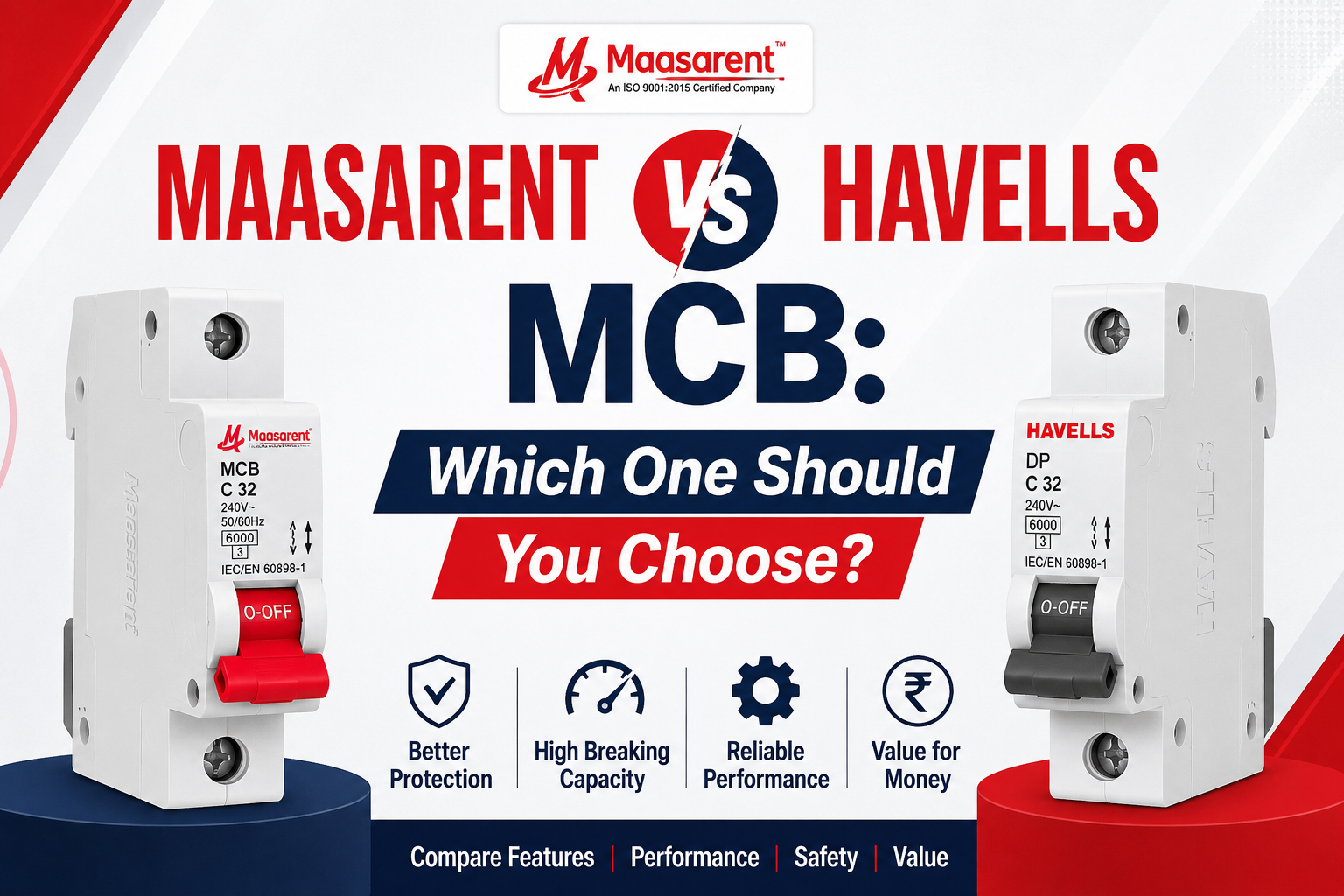
Maasarent vs Havells MCB: Key Comparison
| Factor | Maasarent | Havells |
|---|---|---|
| Product Category | MCB & Electrical Protection | MCB & Electrical Protection |
| Applications | Residential & Commercial Applications | Residential, Commercial & Other Applications |
| Current Rating | Depends on Exact Model | Depends on Exact Model |
| Tripping Curve | Check Product Specification | Depends on Product Series |
| Breaking Capacity | Check Exact Model | Check Exact Model |
| Best Selection Method | Application + Technical Specification | Application + Technical Specification |
1. Current Rating
Current rating is one of the first specifications you should check when comparing MCBs. The selected rating needs to be appropriate for the circuit, connected load, conductor capacity, and overall electrical design.
Common MCB ratings may include 6A, 10A, 16A, 20A, 25A, 32A and higher ratings depending on the product range and application. However, a higher-rated MCB is not automatically a better MCB.
2. B Curve vs C Curve MCB
The tripping curve is another important specification. It affects how the MCB responds to short-duration current increases and starting currents.
B Curve → Commonly used for lighting and relatively low-inrush domestic loads.
C Curve → Commonly considered for circuits with higher starting or inductive currents, such as many motor-based loads.
When comparing Maasarent and Havells, compare equivalent curve types. A B-curve Maasarent MCB and a C-curve Havells MCB are not a like-for-like technical comparison.
3. Breaking Capacity
Breaking capacity indicates the level of prospective short-circuit current that an MCB is designed to interrupt under specified conditions.
This is a critical specification for electrical protection. When comparing Maasarent and Havells, always compare the breaking capacity of the exact models being considered rather than assuming that every MCB in a brand's range has the same value.
4. Pole Configuration
MCBs are available in different pole configurations depending on the electrical system and application. Depending on the product range, you may find SP, SPN, DP, TP, TPN or FP configurations.
The correct configuration should be selected according to the distribution-board design and electrical requirements.
5. Application Matters More Than the Brand Name
Home → Lighting, sockets and individual appliance circuits.
Shop → Lighting, equipment and commercial loads.
Office → Distribution boards and dedicated circuits.
Industrial → Motors, machinery and other electrical loads.
Which MCB Should You Choose?
You need an MCB for a home circuit → Start with the circuit load, wiring capacity, required current rating and appropriate curve.
You are comparing two brands → Compare equivalent models with the same rating, curve, pole configuration and breaking capacity.
You are buying for a project → Consider technical documentation, availability, support, standards and project requirements.
You are unsure → Ask a qualified electrician or electrical professional to select the appropriate protection device.
What About Price and Value?
Price is an important consideration, but it should not be the only factor when choosing an MCB. A lower-priced product is not necessarily the better value if its technical specifications do not match the application.
Instead of comparing only the retail price, look at the complete value proposition: product specification, application suitability, availability, documentation, installation requirements, and long-term project needs.
The Real Answer: Maasarent or Havells?
There is no single MCB brand that is automatically the best for every electrical installation. The right choice is the product that matches your circuit's technical and safety requirements.
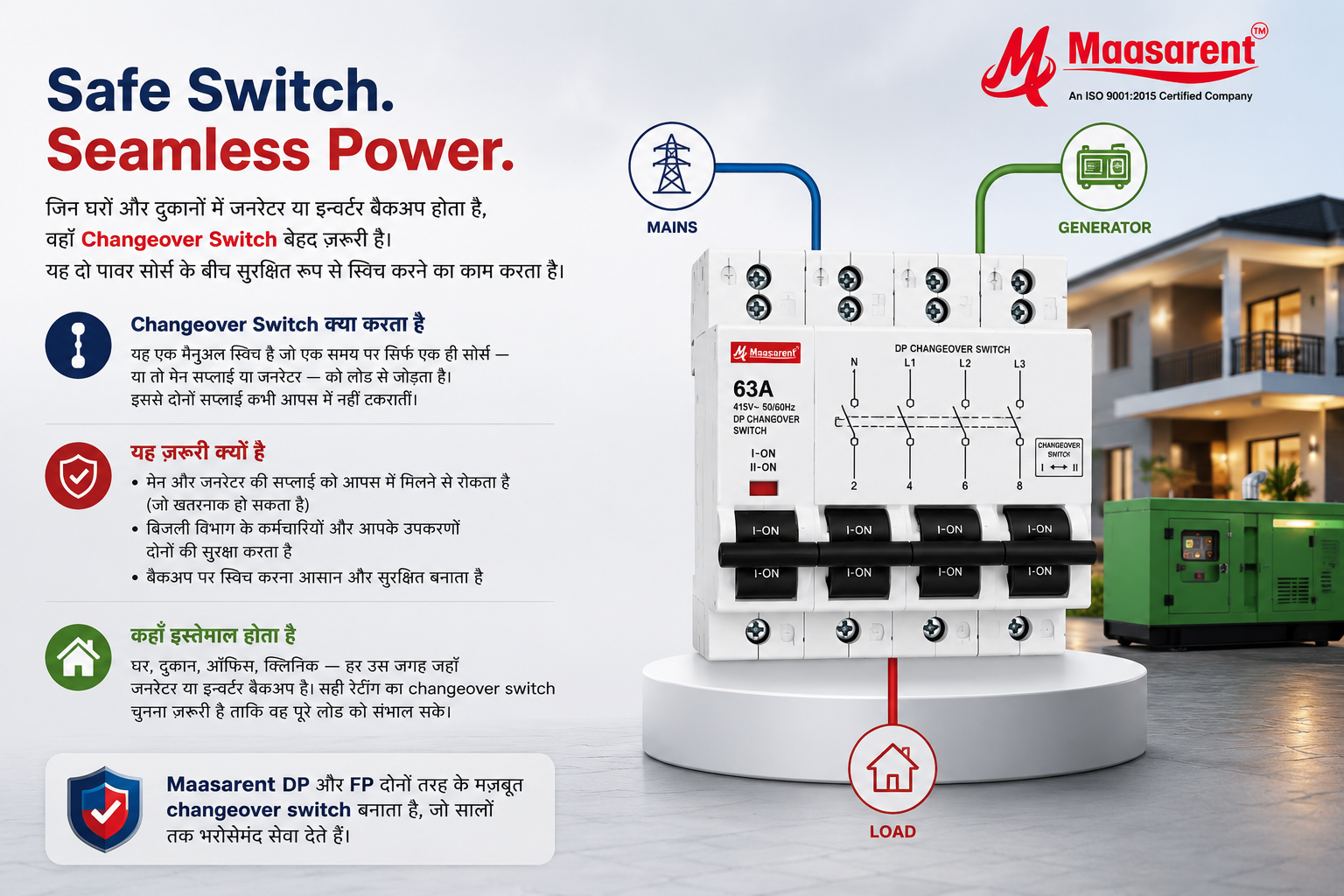
If you are comparing a Maasarent MCB with a Havells MCB, make the comparison between equivalent product specifications. Check the current rating, curve, breaking capacity, pole configuration, voltage rating, applicable standards and intended application.
Smart buying rule: Don't choose an MCB only because of the brand name. First identify the electrical requirement, then compare equivalent products from different manufacturers.
Frequently asked questions
The answer depends on the exact models being compared. Current rating, curve, breaking capacity, pole configuration, standards and application should all be considered.
The best MCB depends on the individual circuit. The correct current rating, curve, breaking capacity and pole configuration should be selected according to the electrical design.
No. A higher-rated MCB is not automatically safer or better. The rating needs to be appropriate for the circuit, wiring and connected load.
For technical selection, the product specification and suitability for the electrical circuit are extremely important. Brand, availability, documentation and project requirements should also be considered.
A replacement should only be made after confirming that the new MCB has compatible electrical and physical specifications and is suitable for the circuit. Consult a qualified electrician before making changes to an electrical installation.
Choose the Right MCB for the Right Application
Whether you are comparing Maasarent, Havells, or another electrical brand, always match the MCB to your circuit requirements, safety needs and installation conditions.