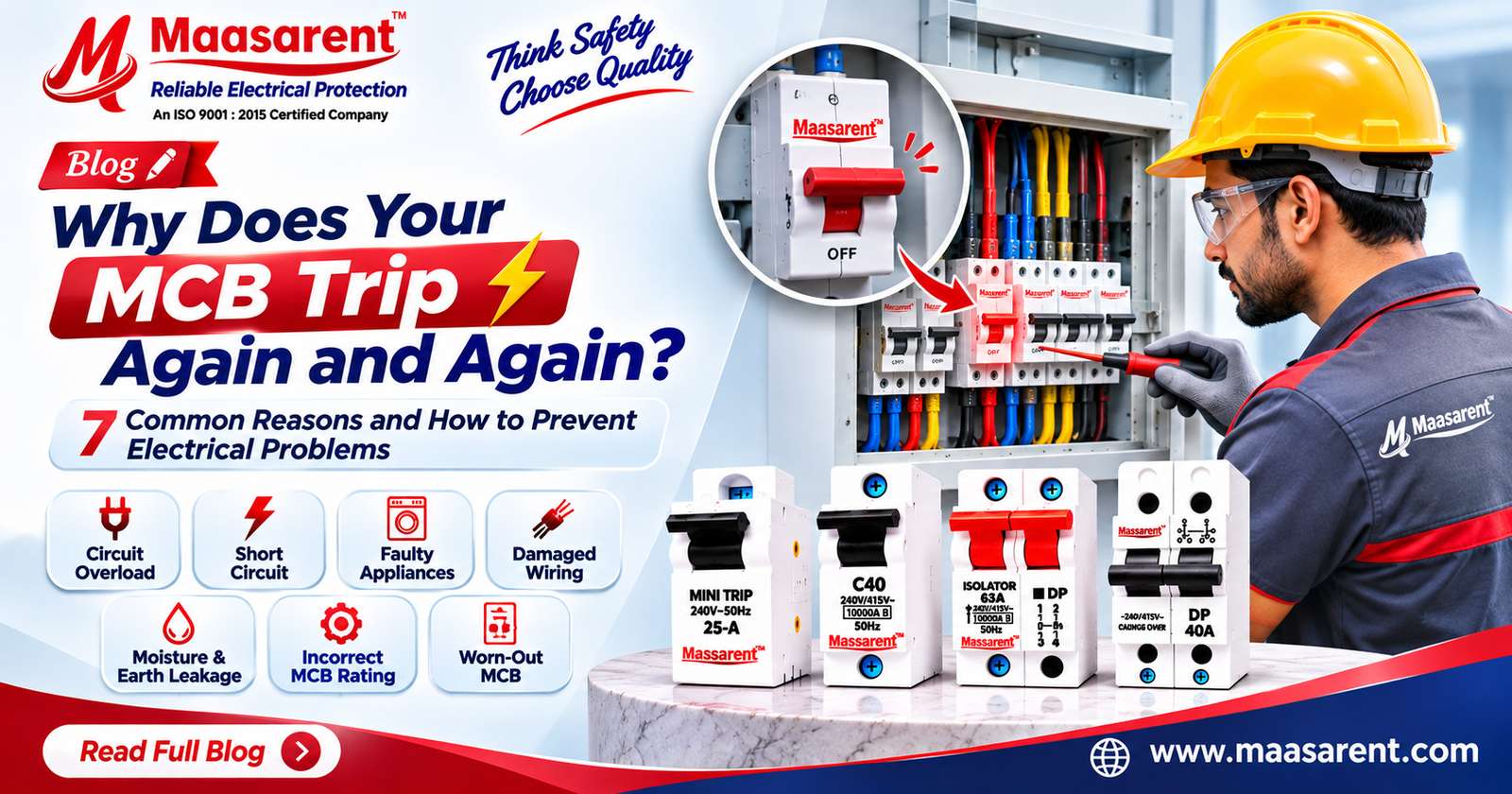
Have you ever experienced a situation where the electricity suddenly switches off, even though the power supply in your neighbourhood is working normally? You check your electrical distribution board and notice that an MCB has switched to the OFF or tripped position.
Occasional circuit breaker tripping can be a warning sign that something is wrong with an electrical circuit. However, when an MCB trips repeatedly, it should never be ignored. Understanding the possible reasons can help homeowners identify problems early and arrange professional inspection.
1. Circuit Overload
One of the common reasons for MCB tripping is circuit overload. This happens when the electrical demand on a circuit exceeds the capacity of its wiring or protective device.
For example, operating multiple high-power appliances on the same circuit may increase the electrical load beyond its permitted limit. The MCB responds by disconnecting the supply to help protect the circuit.
What to do: Ask a qualified electrician to assess the connected load and check whether the circuit distribution and MCB rating are appropriate.
2. Short Circuit Fault
A short circuit occurs when conductors come into unintended contact, creating a low-resistance path for excessive current. It can happen because of damaged insulation, loose wiring, faulty equipment or incorrect connections.
Short circuits can cause sudden MCB tripping and may create serious electrical hazards.
What to do: Do not repeatedly reset the breaker. Keep the affected circuit switched off and arrange an inspection by a qualified electrician.
3. Faulty Electrical Appliances
Sometimes the problem is not in the distribution board but in an appliance connected to the circuit.
A damaged motor, internal wiring fault, defective heating element or deteriorated power cable may cause abnormal current conditions and trigger the protective device.
What to do: Stop using the suspected appliance and have it inspected by a qualified technician.
4. Damaged or Loose Wiring
Electrical wiring can deteriorate over time due to ageing, overheating, physical damage or poor installation practices.
Loose connections may also produce excessive heat and intermittent electrical faults. These conditions require proper investigation rather than temporary fixes.
What to do: Arrange professional inspection of wiring, terminals and electrical connections. Never open an energised distribution panel yourself.
5. Moisture and Earth Leakage
Water entering electrical equipment, damaged insulation or moisture around wiring can create leakage-current problems.
It is important to understand that an MCB and an RCCB perform different functions. An MCB provides overload and short-circuit protection, while an RCCB detects residual current and helps protect against certain earth-leakage risks.
What to do: Have the installation checked for moisture, insulation damage and leakage current. The electrician can determine whether the appropriate protection devices are installed.
6. Incorrect MCB Rating or Selection
Selecting an MCB is not simply about choosing a higher ampere rating. The rating and characteristics must be suitable for the circuit wiring, connected load, installation conditions and applicable electrical standards.
An incorrectly selected protective device may not provide the intended level of protection.
What to do: Consult a qualified electrical professional to verify the MCB specification and its compatibility with the installation.
7. Worn-Out or Faulty Circuit Breaker
Like other electrical components, circuit breakers can experience wear or develop faults over time. Mechanical problems, damaged terminals or deterioration may affect their operation.
If an MCB trips unexpectedly or shows visible damage, it should be professionally examined.
What to do: Have the device tested and replaced when necessary with a suitable, correctly rated product.
How Can You Reduce Frequent MCB Tripping?
Good electrical planning and regular maintenance can help reduce avoidable electrical problems. Follow these practical recommendations:
- Avoid overloading individual electrical circuits.
- Use suitable electrical protection devices.
- Arrange periodic inspection of wiring and distribution boards.
- Replace damaged cables and defective electrical components.
- Ensure proper installation by qualified electricians.
- Never bypass protective devices or replace an MCB with a higher-rated one without proper assessment.
- Keep electrical panels accessible, dry and properly maintained.
Important Electrical Safety Warning
Never repeatedly reset an MCB that keeps tripping. Do not touch exposed wires or attempt repairs inside an electrical panel. Switch off the affected circuit if it is safe to do so and contact a qualified electrician.
Why Choosing the Right MCB Matters
An MCB is an important component of a properly designed electrical distribution system. It helps protect circuits against overload and short-circuit conditions when correctly selected and installed.
Quality, suitable specifications, correct ratings and professional installation all matter when choosing electrical protection products.
At Maasarent, we focus on electrical protection solutions with a product range that includes MCBs, RCCBs, Isolators and Changeover Switches.
Conclusion
Frequent MCB tripping is not something that should be ignored. From overloaded circuits and short circuits to damaged wiring and faulty appliances, several conditions can cause a breaker to switch off.
Identifying the underlying issue and getting professional assistance is essential for maintaining a reliable electrical installation.
Remember, electrical safety begins with awareness, proper planning and the right protection devices.
Think Safety, Choose Quality!
Explore Maasarent's range of MCBs, RCCBs, Isolators and Changeover Switches.
Call Now: 9355255105
Visit www.maasarent.com