Every electrical project involves multiple decisions, from planning the installation to selecting components and coordinating product deliveries. Whether it is a residential building, commercial complex, industrial facility or infrastructure project, electrical procurement plays an important role in project execution.
Contractors, panel builders and procurement teams often need to source different electrical products within specific project timelines. However, placing an order without reviewing the technical requirements can lead to incorrect product selection, compatibility issues or unnecessary delays.
A structured procurement process helps businesses communicate their requirements clearly and evaluate products before confirming an order.
If you are involved in electrical projects, here is a practical checklist to consider before purchasing electrical protection and switching products.
1. Start with the Approved Project Requirements
Before contacting suppliers, review the electrical drawings, specifications, bill of quantities and approved project documents.
These documents help identify which products are required and the technical specifications they must meet.
Prepare a list containing:
- Required product categories.
- Quantity of each product.
- Rated current and voltage.
- Number of poles and configurations.
- Required technical characteristics.
- Applicable standards and project specifications.
Having this information ready makes communication with suppliers more precise and reduces the chances of ordering incorrect products.
2. Understand the Different Electrical Product Categories
Electrical projects may require different protection and switching components. Each product has a specific function, so procurement teams should understand the categories before preparing their purchase requirements.
MCB – Miniature Circuit Breaker
MCBs provide protection against overload and short-circuit currents within their specified ratings.
Procurement checks: Rated current, voltage, pole configuration, breaking capacity and applicable trip characteristics.
RCCB – Residual Current Circuit Breaker
RCCBs detect residual current and provide protection against certain earth-leakage risks as part of a properly designed electrical installation.
Procurement checks: Rated current, residual-current sensitivity, number of poles and compatibility with the required protection arrangement.
Isolator
An isolator is used for manual electrical isolation in suitable applications. It is not a substitute for automatic fault protection.
Procurement checks: Rated current, number of poles, operating arrangement and suitability for the intended application.
Changeover Switch
A changeover switch allows switching between alternative power sources when selected and installed according to the electrical system design.
Procurement checks: Current rating, number of poles, source configuration and suitability for the intended switching arrangement.
3. Verify Technical Specifications Before Ordering
One of the most important procurement steps is verifying the exact product specifications.
Products that look similar may have different ratings or technical characteristics. Therefore, procurement teams should avoid ordering based only on product photographs or general descriptions.
Before confirming an order, verify:
- Rated voltage and current.
- Number of poles.
- Breaking capacity, where applicable.
- Residual-current sensitivity for RCCBs.
- Mounting and terminal arrangements.
- Relevant standards and technical documentation.
- Compatibility with the approved project design.
For technical selection, consult the project engineer or qualified electrical professional. Final product selection should follow the approved electrical design and applicable requirements.
4. Prepare a Proper Bill of Quantities
A clear Bill of Quantities (BOQ) helps procurement teams communicate the exact products and quantities required for a project.
Instead of sending an incomplete enquiry, prepare a structured requirement sheet.
Sample Electrical Product Requirement Sheet
| Product |
Specification |
Quantity |
| MCB |
As per approved BOQ |
To be confirmed |
| RCCB |
As per approved BOQ |
To be confirmed |
| Isolator |
As per approved BOQ |
To be confirmed |
| Changeover Switch |
As per approved BOQ |
To be confirmed |
Note: This is an illustrative format. Actual specifications and quantities must come from the approved project documents.
A detailed BOQ makes it easier for suppliers to understand the enquiry and prepare relevant commercial information.
5. Check Product Documentation and Compliance
Electrical procurement is not only about purchasing the required quantity. The documentation associated with a product is also important.
Depending on the project and product category, ask the supplier for relevant information such as:
- Product datasheets.
- Technical specifications.
- Applicable test reports, where required.
- Relevant compliance certificates.
- Installation and operating instructions.
- Product identification and markings.
Project specifications may require particular standards or supporting documents. Verify these requirements before confirming the purchase.
6. Discuss Pricing, Availability and Delivery Requirements
Project procurement often involves coordinating several products and delivery schedules. An unclear purchasing discussion can create avoidable confusion.
Before finalising an order, discuss the following with your supplier:
- Product-wise pricing and applicable taxes.
- Available quantities.
- Expected delivery timelines.
- Minimum order quantities, if applicable.
- Payment and credit terms, where offered.
- Packaging and dispatch arrangements.
- Warranty or service conditions, where applicable.
Get important commercial terms confirmed in writing so that both parties have a clear understanding of the order.
7. Evaluate Your Supplier Before Confirming the Purchase
A supplier relationship is an important part of project procurement. Beyond the initial quotation, consider whether the supplier can communicate product information and purchasing details clearly.
Evaluate the following points:
- Clarity of product specifications.
- Availability of technical documents.
- Communication during the enquiry process.
- Clarity of commercial terms.
- Product availability confirmation.
- Ability to discuss project and bulk requirements.
Choosing suppliers through a structured evaluation process can help procurement teams make more informed decisions.
8. Why Explore Maasarent for Electrical Product Enquiries?
For contractors, panel builders, electrical suppliers and project procurement teams, understanding the available product range is an important starting point.
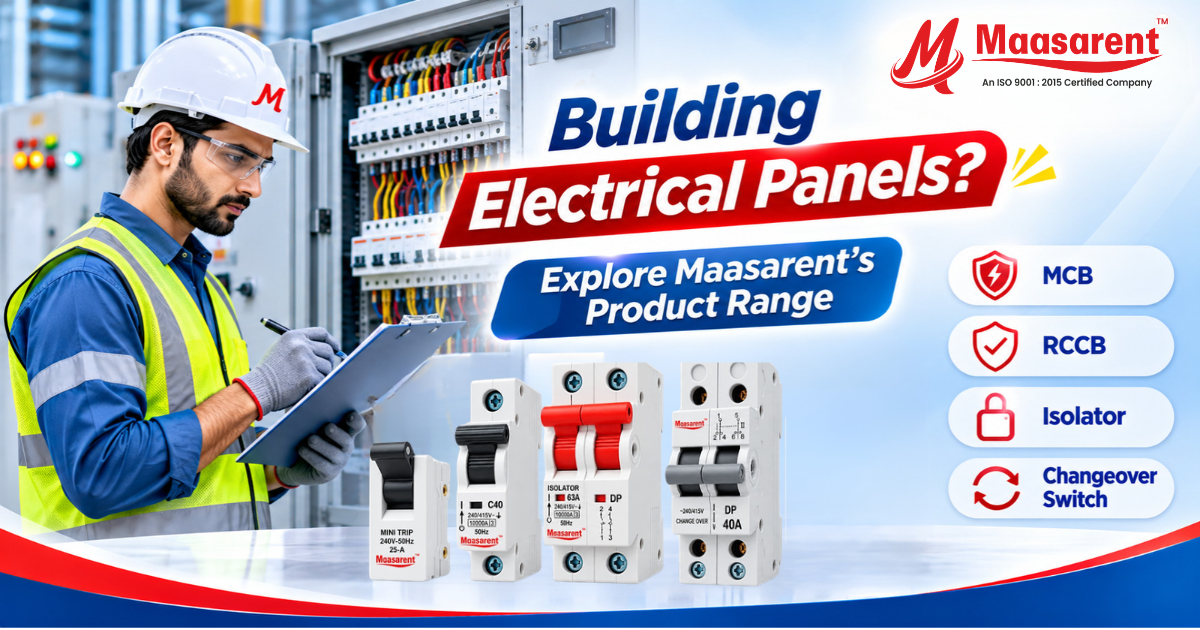
Maasarent offers electrical protection and switching product categories for businesses interested in exploring products for their purchasing requirements.
Our product range includes:
- MCB: Miniature Circuit Breakers.
- RCCB: Residual Current Circuit Breakers.
- Isolator: Manual electrical isolation products.
- Changeover Switch: Products for suitable alternative power source switching.
We welcome enquiries from:
- Electrical contractors.
- Electrical panel builders.
- Builders and developers.
- Project procurement companies.
- Electrical wholesalers and distributors.
- Institutional and commercial buyers.
Connect with Maasarent to discuss your required product categories, specifications and commercial requirements.
A well-prepared enquiry makes the initial purchasing discussion more organised. Keep the following information ready:
Project Procurement Checklist
- ☐ Company or organisation name
- ☐ Project name and location
- ☐ Contact person's details
- ☐ Required product categories
- ☐ Approved product specifications
- ☐ BOQ or estimated quantities
- ☐ Expected delivery schedule
- ☐ Required technical documents
Sharing these details helps suppliers understand the scope of your enquiry and respond with relevant information.
Important Electrical Safety Note
Electrical products must be selected according to the approved project design, intended application, ratings and applicable standards. An RCCB does not independently provide overload and short-circuit protection. Verify all technical details with the project engineer or qualified electrical professional before ordering. Installation and testing should be performed by qualified personnel.
Conclusion
Successful electrical procurement begins with accurate requirements and proper planning. Reviewing project documents, preparing a BOQ, verifying product specifications and discussing commercial terms can make the purchasing process more organised.
Whether you are handling a commercial installation, residential project or electrical panel requirement, choosing suitable products is an important responsibility.
Explore Maasarent's MCB, RCCB, Isolator and Changeover Switch range and connect with our team to discuss your electrical product requirements.
MAASARENT | RELIABLE ELECTRICAL PROTECTION
Planning Your Next Electrical Project?
Share your product requirements with Maasarent. Explore our MCB, RCCB, Isolator and Changeover Switch range.
Call: 9355255105
Enquire with Maasarent
www.maasarent.com